
Hook and loop cable tie roll products solve a simple problem: cables never stay where you want them, and zip ties feel too permanent when you’re always swapping gear.
If you’ve ever unthreaded a dozen cords just to move one monitor, or found a “temporary” tie job turning into a sticky, dusty mess, a reusable wrap roll is usually the cleaner approach. You cut what you need, wrap, adjust, and reuse.
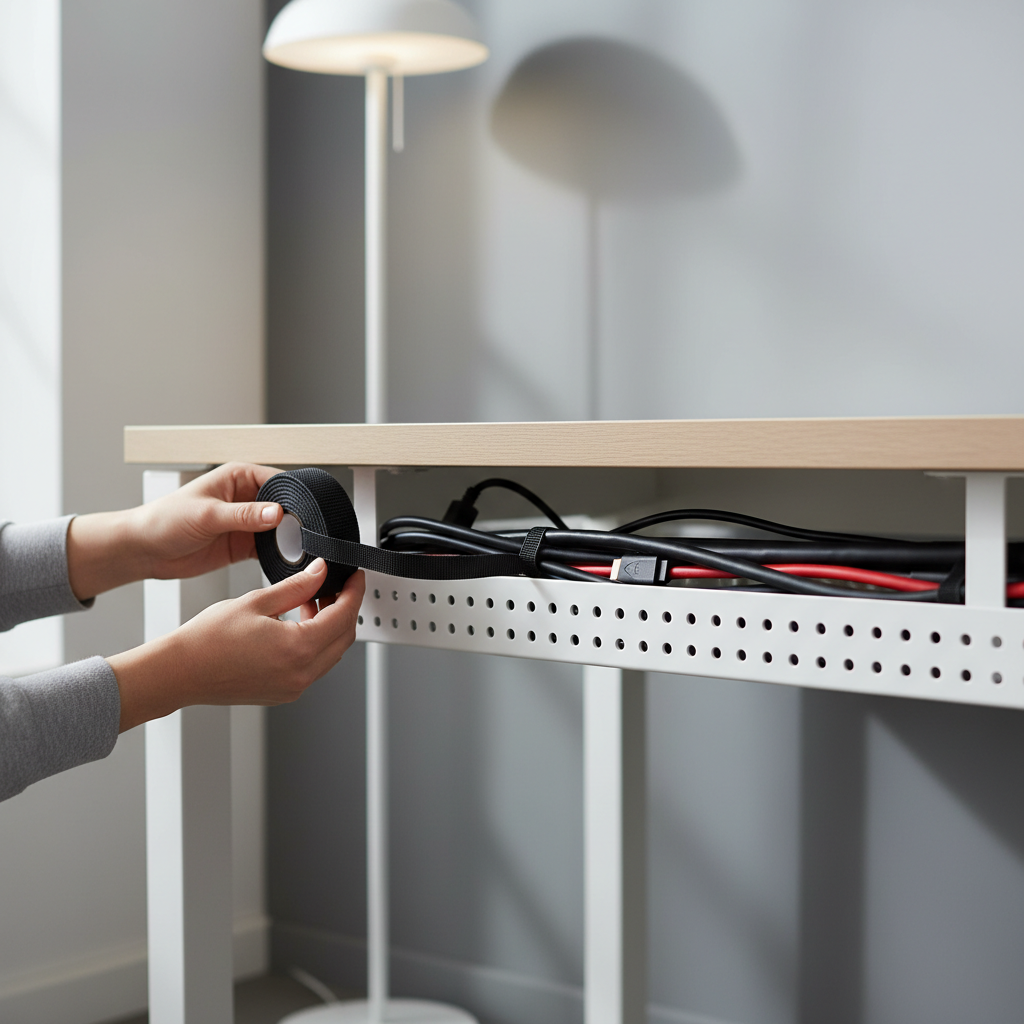
This guide breaks down what to buy, how to size it, where it works best, and the mistakes that make wraps slip, snag, or look sloppy. You’ll also get a quick checklist and a few practical setups for desks, racks, and travel kits.
What a hook and loop cable tie roll is (and why people prefer it)
A roll is continuous hook-and-loop material (think Velcro-style) that you cut to length. Compared with pre-cut straps, the advantage is flexibility: one roll can handle thin USB leads and thicker power bundles without needing five different strap sizes.
- Reusable for frequent changes, lab benches, studios, and IT closets
- Adjustable tension so you can snug bundles without crushing cables
- Cleaner redo than tape, and less “final” than zip ties
- Lower waste in many setups because you cut only what you need
According to OSHA, flexible cords and cables should be used and maintained in a way that reduces damage risk and unsafe conditions, so the “better” choice often comes down to strain relief and avoiding pinch points rather than simply making things look neat.
Common use cases: where a roll works best (and where it doesn’t)
Most people buy a hook-and-loop roll for a desk, then realize it’s useful everywhere. Still, it’s not universal, and knowing the boundary saves time.
Great fits
- Under-desk bundles: power strips, monitor cables, USB hubs
- Home theater: HDMI runs, speaker wire routing, streaming boxes
- Server racks and network closets: patch cord dressing, temporary adds/changes
- Travel and field kits: camera/audio bags, laptop chargers, extension cords
Situations to rethink
- High-heat areas (near hot equipment): material can fatigue faster, and adhesives on “combo” products may fail
- Permanent installs requiring code-specific supports: you may need rated supports or trays, ask a qualified electrician if unsure
- Dirty/greasy environments: hooks can clog, holding power drops until cleaned
Choosing the right roll: width, length, material, and “stickiness”
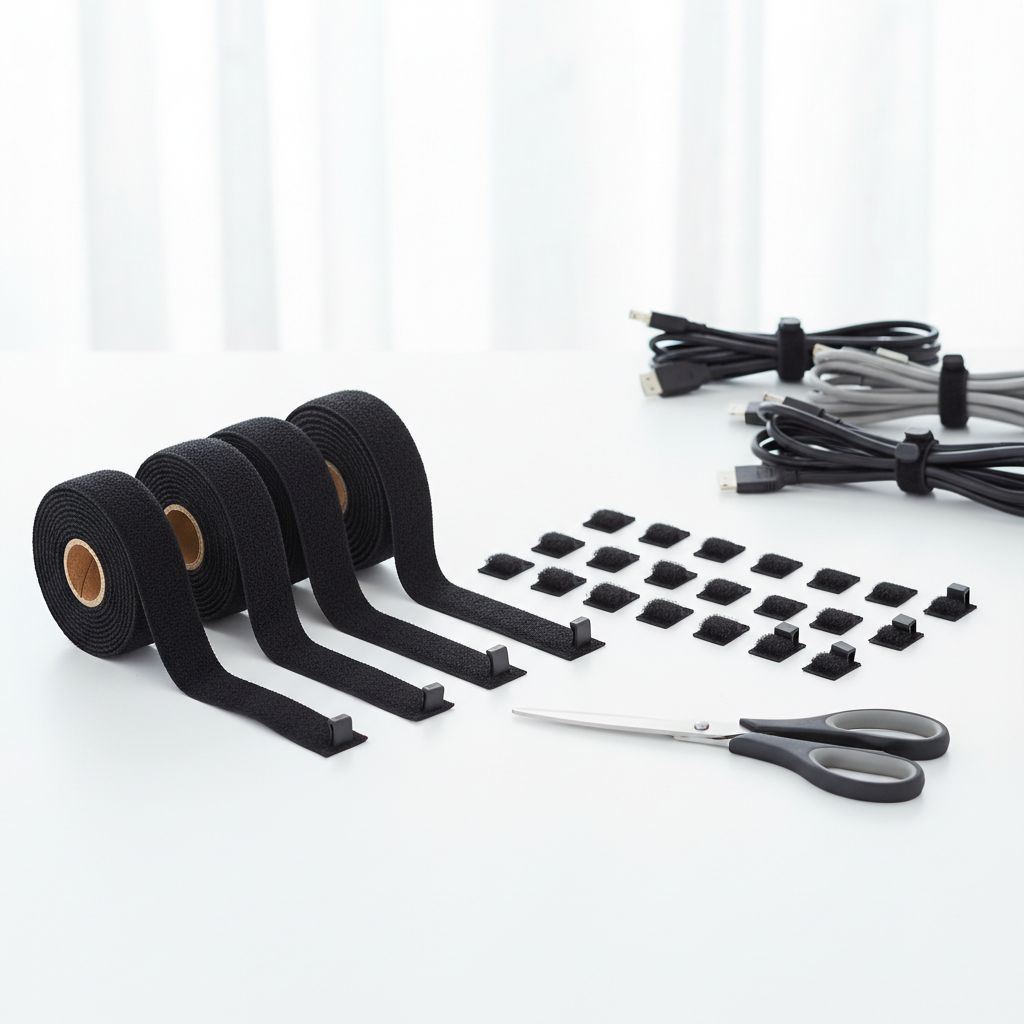
Buying the wrong roll usually shows up as straps that pop open, or wraps so wide they look bulky. These are the decisions that matter in practice.
1) Width: the quickest “will it hold?” signal
- 1/2 in: small bundles, USB, earbuds, light-duty desk runs
- 3/4 in: general-purpose, most home/office bundles
- 1 in+: thick power cords, multi-cable looms, AV racks
If your bundle has heavy “memory” (stiff power cords that spring back), moving up in width often helps more than simply tightening harder.
2) Hook/loop strength: not all rolls feel the same
Some rolls use a gentler hook that’s easy to reposition, others bite hard for heavier bundles. For frequent rework (test benches, creators swapping gear), medium strength tends to be less annoying long-term because it won’t snag everything it touches.
3) Back-to-back vs. one-wrap design
- Back-to-back (hook on one side, loop on the other): simplest, wrap around and it grabs itself
- One-wrap styles: designed for quick overlap and clean finish, often tidier on thin cables
Either can work, but back-to-back rolls are usually more forgiving when you cut imperfect lengths.
4) Color and labeling
Color seems cosmetic until you’re troubleshooting. In racks or shared workspaces, color-coding (power vs. data, room A vs. room B) reduces “unplug the wrong thing” moments.
Quick comparison table: roll vs. alternatives
When you’re deciding what to standardize on, here’s the trade-off view that most teams end up using.
| Option | Best for | Pros | Cons |
|---|---|---|---|
| Hook and loop roll | Adjustable, reusable bundling | Cut-to-size, easy changes, low risk of cable damage | Can collect dust, may loosen on very heavy bundles |
| Pre-cut Velcro straps | Standardized setups | Consistent length, tidy look | Wrong length wastes time, less flexible |
| Zip ties | Long-term, stable bundles | Strong, cheap, compact | Single-use, can pinch cables if overtightened |
| Cable clips / raceways | Routing, not bundling | Clean paths, reduces snagging | Less flexible, often needs mounting |
| Tape | Temporary labeling or quick fixes | Fast in a pinch | Residue, looks messy, ages poorly |
Self-check: what to buy for your setup (fast checklist)
If you’re stuck between two options, this is the shortest path to a good decision.
- Bundle thickness: if the bundle is thicker than two fingers, consider 3/4 in to 1 in width
- Change frequency: weekly changes favor a roll; once-and-done may favor zip ties plus labels
- Environment: dusty shop or garage means you may need occasional cleaning or wider straps
- Finish expectations: client-facing AV installs usually look better with consistent cuts and color coding
- Risk tolerance: if cables are expensive or fragile, avoid anything that encourages overtightening
Key takeaway: for most desks and home offices, a medium-strength, 3/4-inch hook and loop roll is a safe starting point.
How to use a hook and loop cable tie roll (steps that stay neat)
The wrap itself is easy, what trips people up is placement, spacing, and leaving room for movement.
Step-by-step
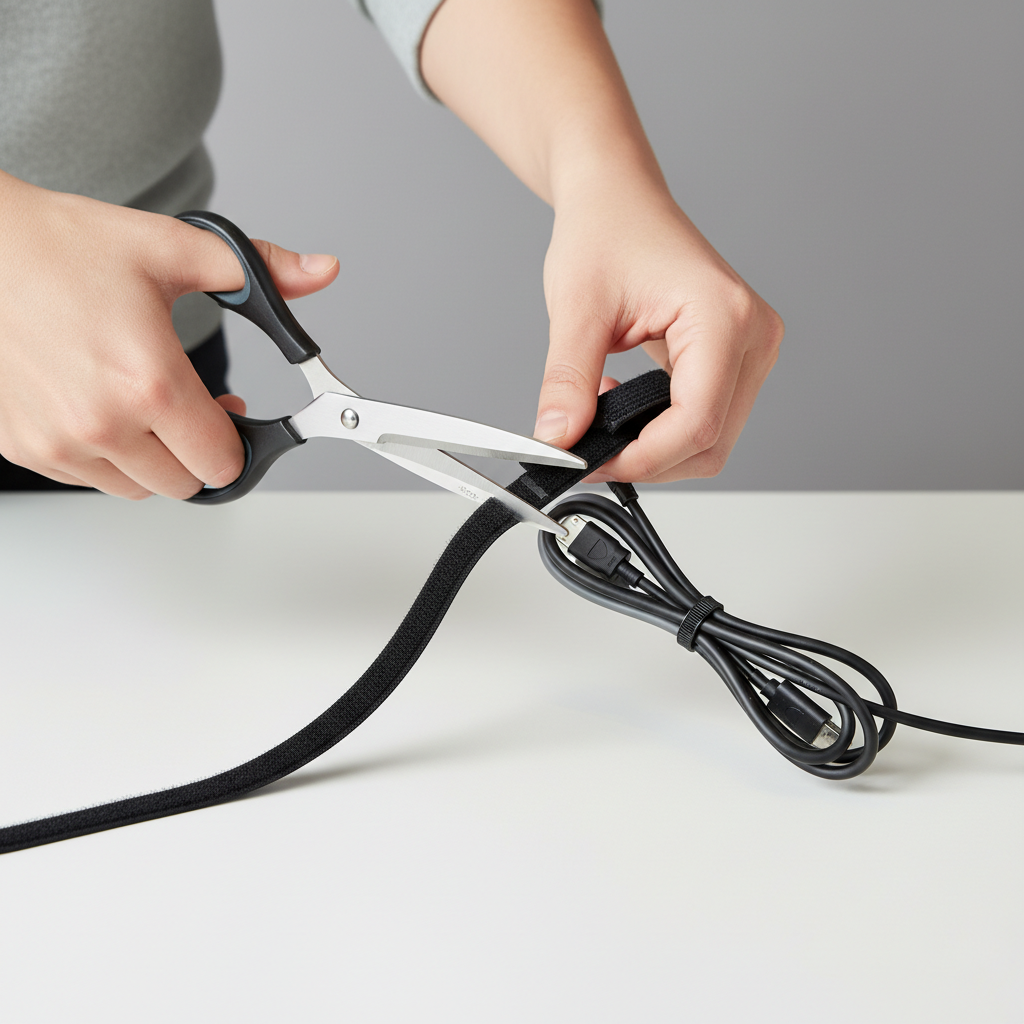
- Cut with a little extra: add about 1–2 inches beyond the overlap you think you need
- Bundle first, route second: get cables roughly in place before tightening wraps
- Use two wraps for long runs: one near each end of the section, add a third in the middle if sagging starts
- Leave a service loop: a small slack curve near devices prevents strain when you move things
- Press, don’t crank: snug is enough; crushing a cable can cause intermittent issues
According to the NFPA, good housekeeping and proper management of electrical wiring helps reduce hazards in many environments, so the win isn’t only aesthetics, it’s also fewer snag points and less accidental stress on cords.
Mistakes that make wraps fail (and easy fixes)
When people say “Velcro doesn’t hold,” it’s often one of these scenarios.
- Too short overlap: if you only overlap a tiny patch, it peels under tension, cut a longer strap
- Hook side facing out everywhere: it grabs fabric, collects lint, and feels messy, flip orientation so loop faces outward when possible
- One wrap for a heavy bundle: thick power cords need spacing, add a second tie rather than overtightening one
- Wrapping at sharp bends: the tie “walks” off the bend over time, place the tie on a straighter section
- Ignoring movement points: sit-stand desks, monitor arms, rolling carts all need slack and flexible bundling
If you’re managing many cables, a simple habit helps: cut a few standard lengths (short/medium/long) and keep them in a small bin so you’re not eyeballing every time.
Practical setups: desk, rack, and travel kit
Same roll, different priorities. These setups stay realistic for how people actually work.
Home/office desk
- Group by destination: one bundle for monitors, one for peripherals, one for power
- Place wraps where you can reach them without crawling under the desk
- Use a wider strap near the power strip where cords fight for space
Network/AV rack
- Bundle patch cords lightly, avoid flattening or sharply bending cables
- Keep power and data separated when practical for tidiness and troubleshooting
- Add small labels near key runs, the time saved later is real
Travel kit
- Pre-cut short strips for charger bricks and adapters
- Choose gentler hook strength if wraps touch fabric pouches often
- Keep one longer strip for emergency bundling of extension cords
Safety, care, and when to ask for help
Cable wraps are low-risk, but safety issues show up when bundling hides damage or creates tension. If you see cracked insulation, warm plugs, or frequent breaker trips, stop “organizing” and troubleshoot the underlying electrical issue.
- Avoid bundling tightly around power adapters that already run warm, heat buildup can be a concern
- Inspect cords periodically, bundling can hide cuts or kinks
- Don’t use wraps as load-bearing supports for heavy cable runs in walls or ceilings
If the setup involves in-wall wiring, commercial spaces, or any uncertainty around electrical code, it’s sensible to consult a licensed electrician or your facilities team, especially because requirements vary by jurisdiction and application.
Conclusion: a small upgrade that keeps paying off
A hook and loop cable tie roll is one of those rare accessories that stays useful after the first cleanup, because it matches how people really use devices: you add, remove, move, and re-route. Buy a sensible width, cut longer than you think, and build in slack where things move.
If you want a low-effort next step, pick one roll for your primary workspace, do one “zone” at a time (power, displays, peripherals), then keep a few pre-cut strips in a drawer so cable management stays a habit instead of a weekend project.
FAQ
What size hook and loop cable tie roll should I buy for a home office?
For most home office bundles, 3/4 inch works well because it balances grip and flexibility. If you mainly manage thin USB cables, 1/2 inch can feel cleaner.
Will hook and loop straps damage cables?
Typically they’re gentler than zip ties because you can avoid overtightening. Damage risk usually comes from wrapping too tight at a sharp bend or pulling cables into strained positions.
How do I keep the roll from collecting lint and losing grip?
Try orienting the loop side outward so hooks aren’t exposed. If hooks clog, a quick pass with a small brush can restore holding power in many cases.
Is a roll better than pre-cut Velcro cable ties?
A roll is more flexible when your cable bundles vary in thickness. Pre-cut straps can look more uniform, which matters in racks or client-facing installs, but they’re less forgiving when lengths don’t match.
Can I use hook and loop wraps on extension cords?
Yes, it’s a common use for storage. Just avoid wrapping so tightly that you kink the cord, and don’t store cords with visible damage.
How many wraps should I use on a long cable run under a desk?
Two is a good baseline, one near each end of the section you’re bundling. Add a third if the bundle sags or gets bumped often.
Are hook and loop cable ties acceptable for server racks?
They’re widely used for dressing patch cords because changes happen frequently. In structured cabling environments, teams often follow internal standards, so it’s worth matching whatever your site uses for consistency.
If you’re organizing a desk, a rack, or a mobile kit and you want a more “set it up once, adjust anytime” approach, a well-chosen hook-and-loop roll plus a few standard cut lengths can make the whole system feel calmer without turning it into a big project.