
spark plug gap tool gauge questions usually show up right after a tune-up goes sideways, the engine starts to misfire, or a brand-new plug “should be fine” but doesn’t feel fine.
The gap is small, but the effect is not. Too tight and the spark can be weak, too wide and the coil may struggle under load, either way you can end up chasing a rough idle, hesitation, or poor fuel economy that feels mysterious until you measure it.
This guide breaks down what the common tools actually do, when a feeler gauge beats a coin-style gapping tool, and how to set the gap without damaging the plug. I’ll also call out a few shop-floor mistakes that waste time, because that’s where most people get stuck.
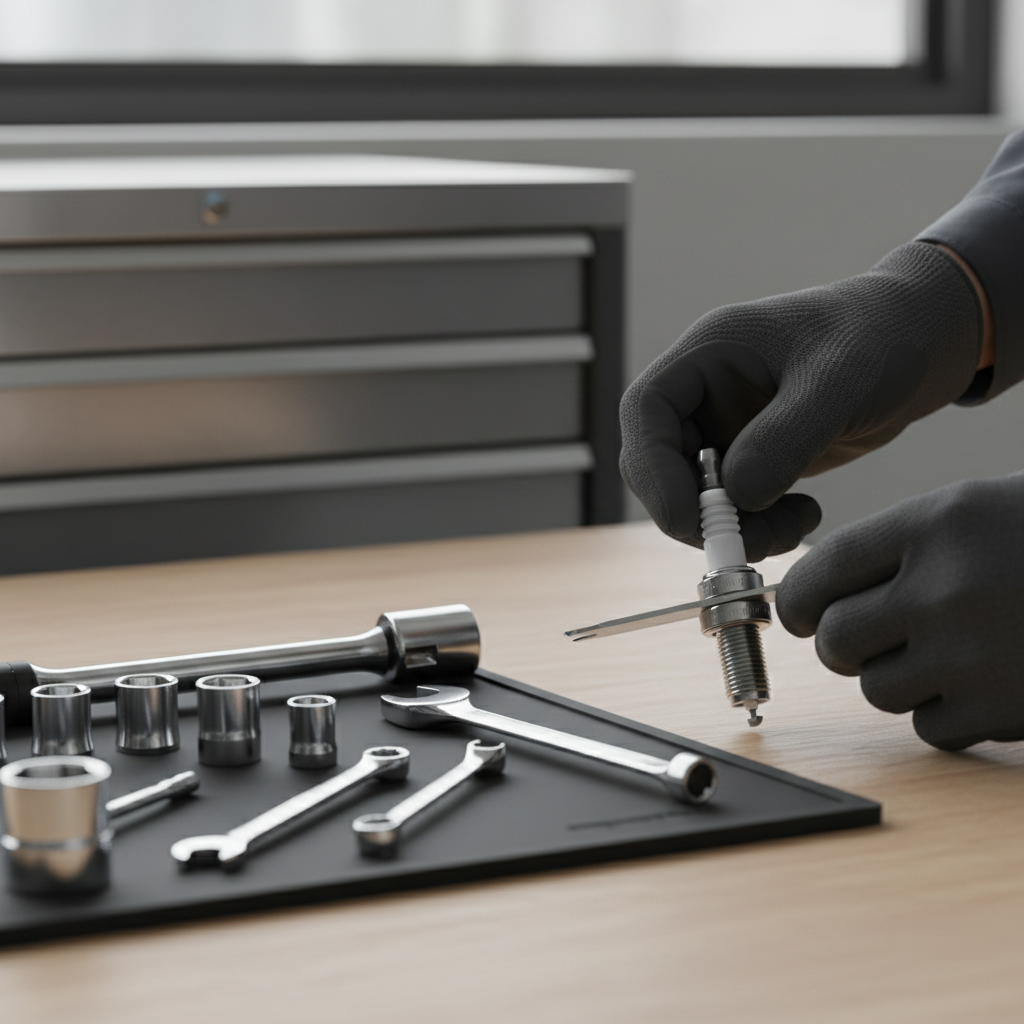
Why spark plug gap matters more than most people expect
A spark plug gap is the distance the spark must jump between the center electrode and the ground strap. That tiny air gap changes the voltage demand on the ignition system, and it can change how consistently the mixture lights off, especially under load.
In real garages, the “right” gap isn’t just a number, it’s a number tied to your ignition strength, cylinder pressure, and plug type. Turbocharged and high-compression engines often run tighter gaps than older naturally aspirated engines, because it helps prevent spark blowout when cylinder pressure rises.
- Too wide: may cause misfire under acceleration, higher coil stress, and a stumble that shows up when you need power.
- Too tight: may start and idle fine, but can reduce burn efficiency and sometimes worsen cold starts.
- Inconsistent gaps across cylinders: can create uneven idle and weird, intermittent drivability issues.
According to NGK Spark Plugs, you should follow the vehicle or engine manufacturer’s specification for plug gap and handle the ground electrode carefully when adjusting. That “carefully” part is not a throwaway line, small damage changes how the plug fires.
Spark plug gap tool vs. feeler gauge: what each one does well
There are two common approaches: a dedicated gapping tool and a feeler gauge. People mix the terms, but they’re not interchangeable in practice.
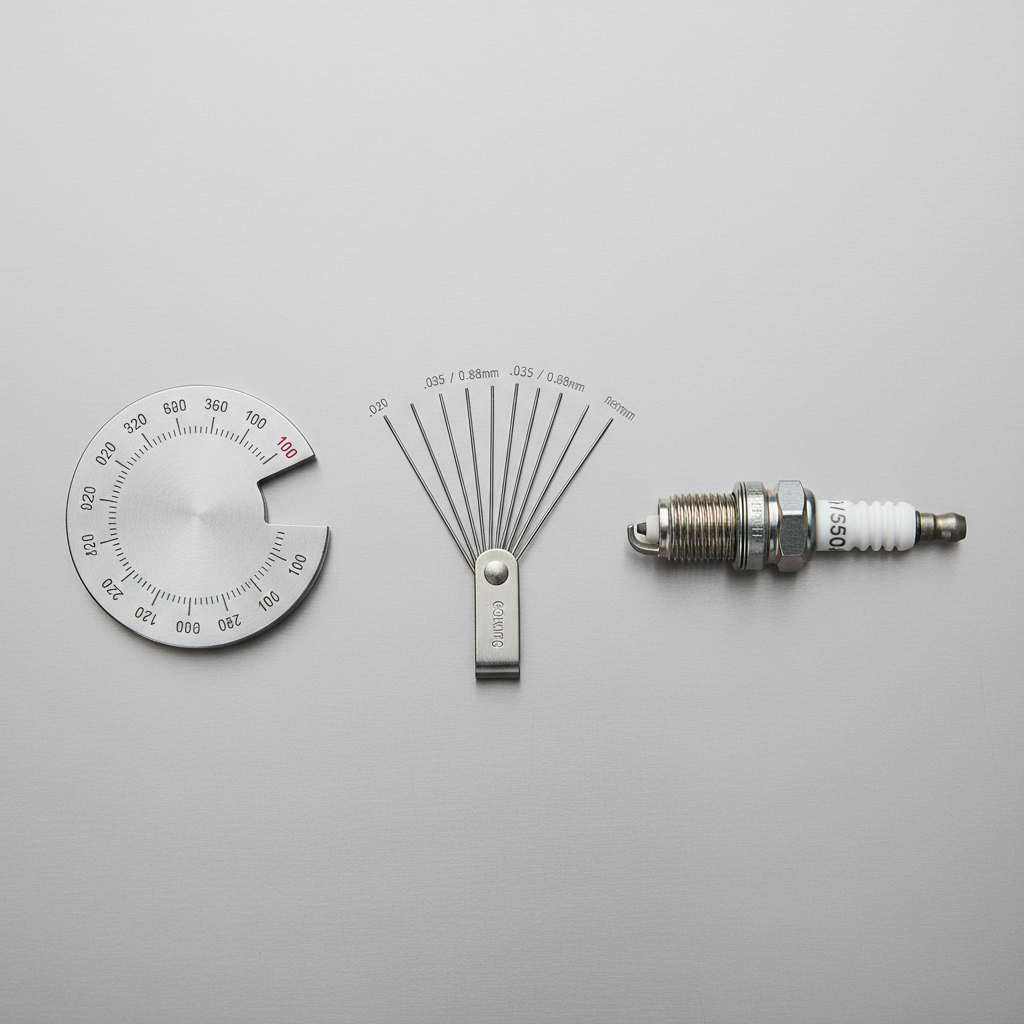
Coin-style (ramp) spark plug gap tool
This is the round disc with a tapered ramp and numbers around the edge. It’s quick for a rough check, and many versions include a small slot that can bend the ground strap.
- Fast for basic plugs when you just need to verify a gap.
- Easy to carry in a glovebox toolbox.
- Less ideal when you need precision or when access is awkward.
Wire feeler gauge (or blade feeler gauge)
A feeler gauge measures the gap directly. Wire-style gauges are popular for plugs because the wire slides between electrodes without “faking” a reading on angled surfaces.
- More accurate for confirming the final gap.
- Better for fine adjustments, especially on engines that are picky.
- Requires a little more patience, and the gauge must be clean and not bent.
If you’re choosing only one, a feeler gauge usually brings fewer surprises. A coin tool still helps for quick adjustments, but many DIYers end up using both: one to move the strap, one to verify the number.
Quick self-check: do you actually need to adjust the gap?
Some spark plugs are sold “pre-gapped,” and in many cases they’re close, but shipping knocks happen, and specs vary by engine. Here’s a quick reality check before you start bending anything.
- You’re installing plugs in a stock daily driver and the box says pre-gapped: still measure, adjust only if it’s off spec.
- You’re running boost, towing, or track use: measuring is non-negotiable, and tighter gaps are common.
- You bought a different brand/heat range than OEM: assume nothing, verify the spec for your application.
- The engine has a history of misfire codes: measure gaps across all plugs to rule out inconsistency.
- You’re using iridium/platinum fine-wire plugs: avoid aggressive bending, adjust only if the manufacturer allows.
Also, be honest about your goal. If you’re trying to fix a rough idle, a correct gap helps, but it won’t compensate for vacuum leaks, bad coils, injector issues, or low compression.
Step-by-step: how to measure and set spark plug gap safely
If you take away one thing, make it this: measure first, adjust second, verify last. Most “bad gap” stories come from skipping the verification step.
What you’ll need
- Wire feeler gauge (recommended) or blade feeler gauge
- Coin-style gapping tool or a dedicated gapping pliers tool
- Clean rag, good lighting
1) Find the correct spec
Use the vehicle service information, under-hood sticker (if present), or plug maker’s catalog entry for your exact engine. According to the Federal Trade Commission (FTC), owners should rely on the automaker’s maintenance recommendations and service information, which is a good reminder not to guess when a spec is available.
2) Measure the current gap
Slide the correct feeler wire through the gap. You’re looking for a light drag, not a jam and not free-play. If it slides with no resistance, the gap is wider than that size, if it won’t fit, the gap is tighter.
3) Adjust without damaging the plug
- To increase gap: bend the ground strap outward slightly using a proper gapping slot or tool, tiny moves only.
- To decrease gap: tap the ground strap gently against a hard surface or use a tool designed to close the gap, avoid pressing on the center electrode.
- For fine-wire iridium/platinum plugs: avoid touching the fine center tip, many plug makers warn that damage may shorten life or affect performance.
4) Re-measure and match all cylinders
Repeat until you hit the spec, then check every plug so they match. The spark plug gap tool gauge mindset here is consistency, because one “off” plug can make diagnostics messy later.
Choosing the right tool: a practical buyer’s checklist
Not all gauges feel the same in your hand, and some tools are more “frustration reducers” than “precision upgrades.” Here’s what matters most for typical DIY and light shop use.
- Wire gauge range: make sure it covers common automotive gaps (your engine spec matters more than any general range).
- Clear markings: etched or stamped sizes tend to last longer than printed ink.
- Stiffness: floppy wires make readings inconsistent, especially in low light.
- Gapping method: coin tool works, but dedicated gapping pliers can be gentler and more controlled.
- Storage: a gauge that stays clean and unbent is a gauge you can trust.
Common gap specs and tool fit (quick reference table)
Exact specs vary by engine, year, ignition system, and plug design, so treat this as a “what you’ll often see,” not a promise. Always verify your specific spec before setting the gap.
| Vehicle/Engine scenario | Typical gap range you may see | Tool that usually works best | Extra note |
|---|---|---|---|
| Older distributor ignition | Often wider than modern systems | Wire feeler gauge + coin tool | Wider gaps can stress weak coils and old wires |
| Modern coil-on-plug daily driver | Mid-range, spec-driven | Wire feeler gauge | Consistency across cylinders matters |
| Turbocharged / boosted applications | Often tighter than NA | Wire feeler gauge + gentle adjust tool | Tighter gaps may reduce spark blowout under load |
| Small engines (mowers, generators) | Commonly moderate gaps | Coin tool for quick check, feeler gauge to confirm | Access can be tight, good lighting helps |
Mistakes that waste time (and how to avoid them)
A lot of people “set the gap” and still have issues, not because the idea is wrong, but because the execution gets sloppy in predictable ways.
- Measuring on an angle: a feeler gauge should slide through the true gap, not scrape the side of the strap.
- Using the coin ramp as the final truth: ramps are convenient, but they can mislead if the strap is uneven or the tool is worn.
- Bending the center electrode: don’t, even if it seems faster. It can crack ceramic or damage fine tips.
- Over-adjusting: big bends make the strap weak and inconsistent, sneak up on the number.
- Ignoring plug type rules: some premium plugs are not meant to be re-gapped aggressively, check the manufacturer guidance.
If you’re troubleshooting a misfire, also keep in mind that a perfect spark plug gap tool gauge reading won’t fix a failing coil, oil-fouled plug from a valve cover leak, or a fueling problem.

When to stop DIY and ask for help
If the plug gap is wildly off, the electrode looks damaged, or you keep getting misfire codes after you verify the spec, it may be time to involve a pro. That’s especially true if you’re dealing with a turbo engine running higher boost, an aftermarket tune, or repeated coil failures, where “close enough” can turn into expensive guessing.
Also, if you see signs of cross-threading, cracked porcelain, fuel-soaked plugs, or heavy oil deposits, a technician can help confirm the root cause. Those symptoms can point to issues beyond ignition, and in many cases you’ll save money by diagnosing once instead of swapping parts.
Key takeaways + a simple next step
The spark plug gap tool gauge you choose matters less than your process: measure, adjust gently, verify, and keep all plugs consistent. A wire feeler gauge tends to be the most dependable way to confirm the final number, while a coin tool can be handy for quick movement of the ground strap.
If you’re installing plugs this weekend, pull the spec, check every plug out of the box, and write the final gap on the package flap. That tiny note can make future troubleshooting much less annoying.
FAQ
Do I really need a feeler gauge if my plugs are “pre-gapped”?
It’s smart to measure anyway. Pre-gapped often means “set at the factory,” and handling or shipping can nudge the ground strap. A quick check prevents a lot of second-guessing later.
What’s the most accurate spark plug gap tool gauge for home use?
Many DIYers get the most consistent results with a wire feeler gauge. It directly verifies the gap with less interpretation than a ramp-style coin tool.
Can I use a flat blade feeler gauge instead of a wire gauge?
You can, and plenty of people do, but blade thickness and how it contacts the electrodes can make readings feel “off” on some plug designs. Wire gauges tend to match the plug geometry better.
Should I gap iridium or platinum spark plugs?
Sometimes yes, sometimes no. Many premium fine-wire plugs can be adjusted, but the adjustment needs to be gentle and focused on the ground strap only. If the manufacturer warns against re-gapping, follow that guidance.
What symptoms point to an incorrect plug gap?
Common complaints include misfire under load, hesitation, rough idle, and reduced MPG. Those symptoms overlap with other issues though, so confirming the gap is a good first step, not the only step.
Why does my engine misfire only when I accelerate hard?
Under load, cylinder pressure rises and it takes more voltage to jump the gap. If the gap is too wide or ignition components are weak, misfire can show up during acceleration even if idle seems fine.
How do I know if I bent the ground strap too much?
If the strap looks twisted, uneven, or the gap changes a lot with tiny touches, it’s probably been overworked. In that situation, replacing the plug is often safer than trying to “bend it back” repeatedly.
If you’re trying to pick a gauge set that matches your engine spec and you want a more straightforward routine, keep it simple: a quality wire feeler gauge plus a gentle gapping tool covers most jobs without turning spark plugs into a guessing game.