
tube bender tool refrigeration searches usually come from the same place, you tried to form a tight bend, the copper flattened a bit, and now you’re wondering if that small kink will turn into a leak later.
The good news is most “bad bends” are less about strength and more about control, radius, and choosing the right bender for the tube size and wall thickness, especially on refrigeration lines where oil return and vibration matter.
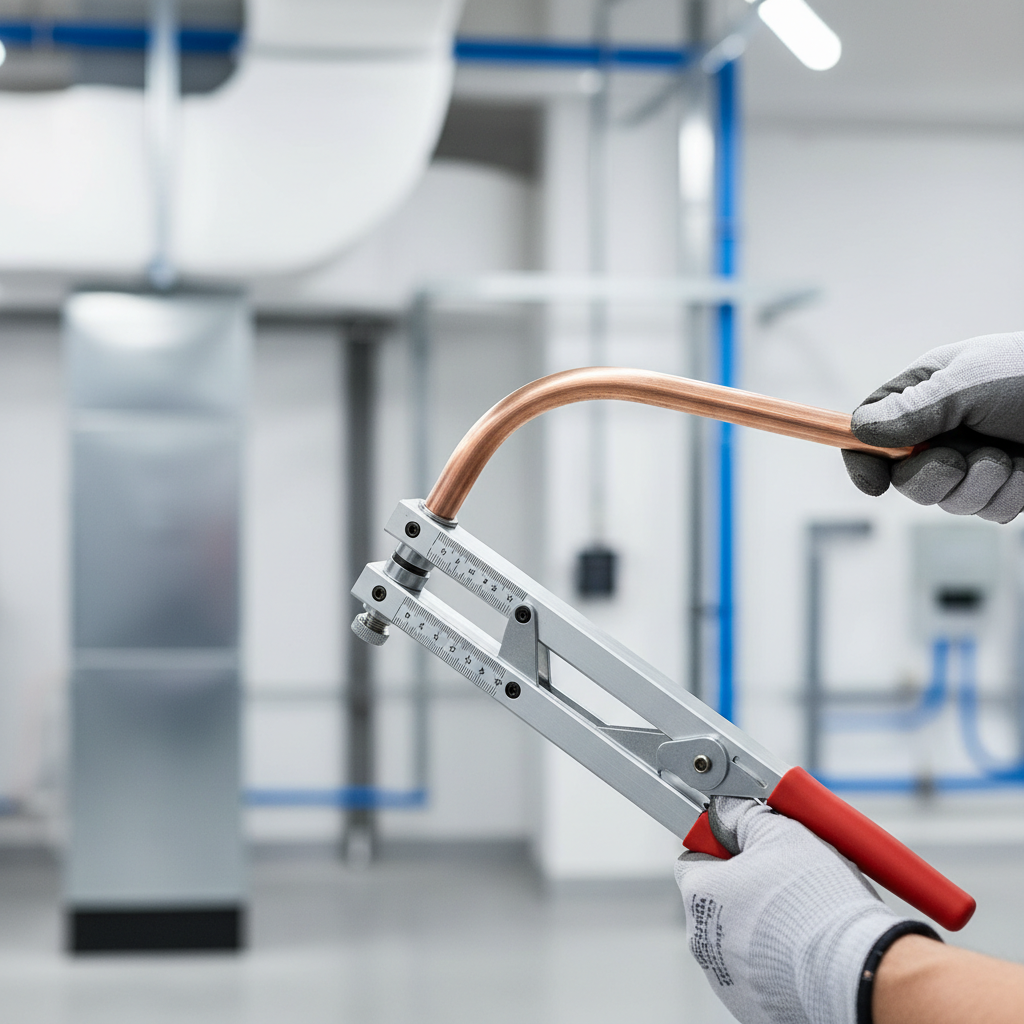
This guide keeps it practical, what causes kinks, how to tell if a bend is acceptable, what tool type fits which line set, and a simple bending process you can repeat without wasting tubing.
Why refrigeration lines kink so easily
Refrigeration tubing is forgiving until it isn’t, and the line set sizes people work with most often, like 1/4, 3/8, 1/2 inch, can look “soft” but still collapse if the bend radius gets too tight or the force goes slightly off-axis.
- Too-small bend radius, trying to “make it fit” around framing or condensers tends to oval the tube.
- Wrong tool for the tubing, a light-duty bender can struggle with thicker wall copper, and the shoe may not fully support the tube.
- Tube not fully seated in the form groove, a tiny gap is enough to start a flat spot.
- Bending near a flare/swage, the hardened area doesn’t flow like annealed copper, so the bend starts to buckle.
- Cold, work-hardened copper, coils that have been straightened and re-straightened often behave worse on the next bend.
According to OSHA, hand and power tools should be used and maintained per manufacturer instructions to reduce injury risk, that matters here because “forcing it” is when hands slip, tubing whips, or tools crack under load.
Common tube bender tool types (and when each makes sense)
Not every job needs the same bender, and in many HVAC situations the “best” option is the one that fits the space while still supporting the tubing all the way through the arc.
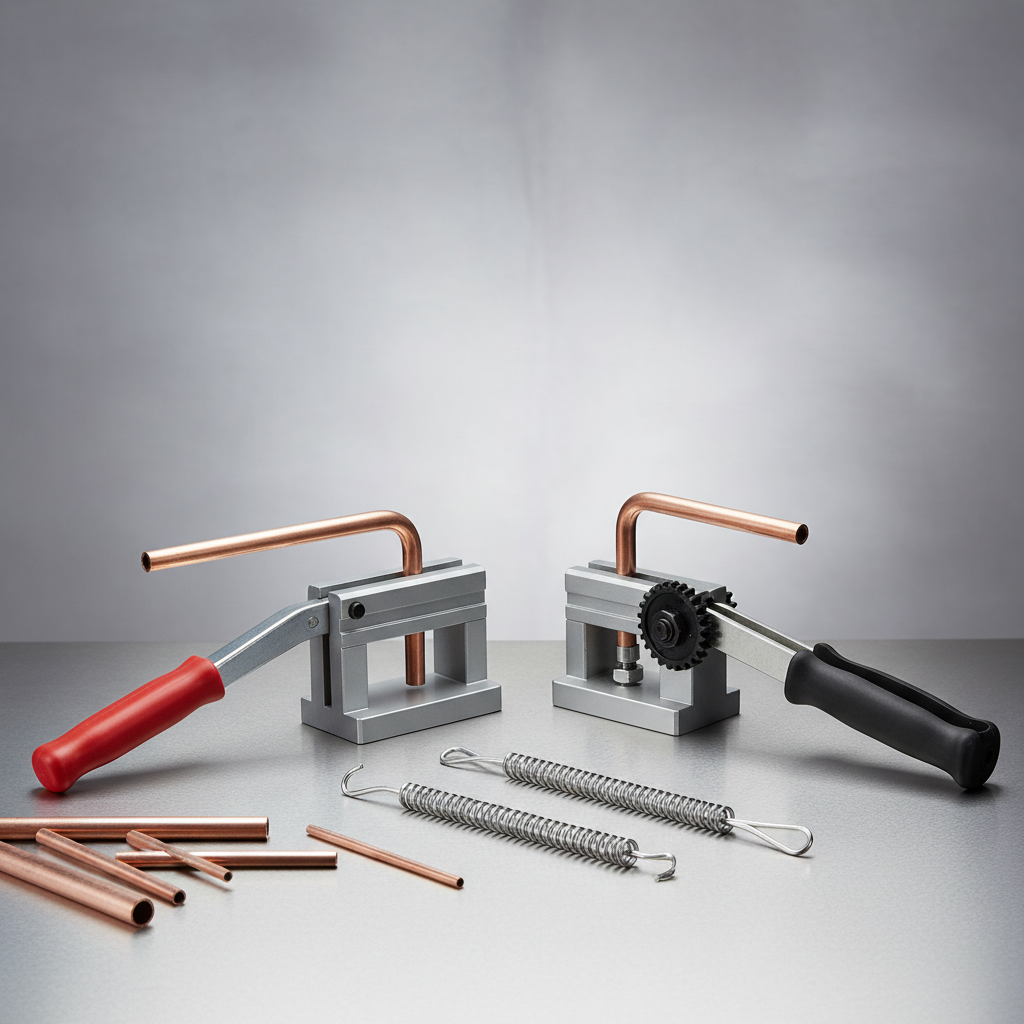
Lever (hand) tube benders
These are the everyday choice for many techs, strong control, consistent radius, and usually available in dedicated sizes. If you do line sets regularly, this type often earns its spot in the bag.
Ratcheting benders
Ratcheting models help when clearance is tight or when you need more mechanical advantage. They can reduce fatigue on thicker wall tubing, but you still need to watch alignment so the bend tracks clean.
Spring benders (external or internal)
Spring benders can work for gentle bends and quick corrections, but they’re easier to misuse on tighter radii. In refrigeration work, they’re more “get out of trouble” than “do it all,” especially if you care about repeatability.
Bench benders / larger forming tools
For shop builds or repeat production, bench tools give the most consistent bends. On-site, they’re usually overkill unless you’re fabricating assemblies.
Quick selection checklist (size, material, and bend quality)
If you’re choosing a tube bender tool refrigeration work can depend on, focus less on brand hype and more on fit and support. Here’s a fast way to narrow it down.
- Tube OD match, the groove must match the outside diameter exactly, “close enough” invites flattening.
- Material, soft copper bends differently than aluminum or stainless, confirm the tool is rated for your tubing type.
- Wall thickness, mini-split line sets can vary, thicker wall usually needs a sturdier bender.
- Minimum bend radius, pick a tool that forms a radius you can live with in your install path.
- Jobsite clearance, if you’re bending near a wall, a compact or ratcheting design may matter more than speed.
How to bend refrigeration lines cleanly (a repeatable method)
This is the part many people rush, not because they don’t know better, but because the tubing already “almost fits.” Slow down here and you usually save time later.
1) Plan the path and mark your start point
Dry-fit the line where it needs to go, then mark the bend start and the target angle. If the bender has a reference mark, use it, if not, add your own with a marker.
2) Cut and prep the tube end
Use a tubing cutter, then deburr the inside edge. Burrs can restrict flow and can cause weird feel when you’re pressure testing or pulling vacuum later.
3) Seat the tube fully in the form
Make sure the tube sits all the way into the shoe and hook. Mis-seating is one of the most common reasons bends come out with a flat spot, even when the tool is decent.
4) Bend smoothly, don’t “pump” the angle
Apply steady force and keep the handles aligned. If you stop and restart repeatedly, you can create a slight ripple that becomes a stress point once the unit vibrates.
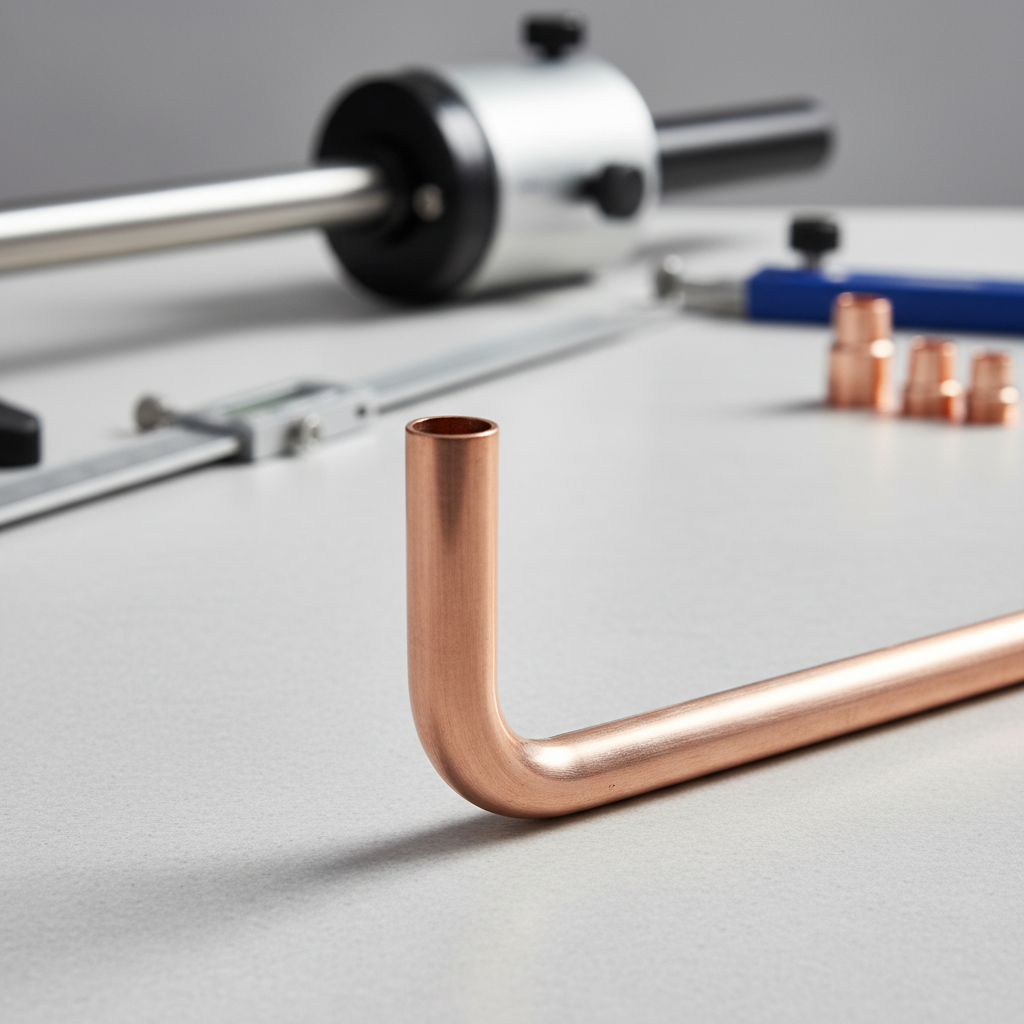
5) Check the bend, then correct gently if needed
Look for ovaling, wrinkles, or a “hinge” point. Minor angle tweaks are fine, but if the tube starts to crease, it’s usually smarter to remake that section than to fight it.
Quality checks that matter in real installs
You don’t need a lab to judge bend quality, you need a couple quick checks that match refrigeration realities, pressure, vibration, and long-term reliability.
- No visible kink or crease, if you can see a sharp fold, treat it as suspect.
- Minimal flattening, a slightly oval tube can happen, but heavy ovaling reduces cross-sectional area and can affect performance.
- Angle accuracy, mis-angled bends force the line into position, that stress can show up later as rub points or fatigue.
- Clearance, keep bends away from sharp edges and spots where vibration can cause wear through.
According to the EPA, technicians handling refrigerants must follow applicable regulations and certification requirements, so if your bending work ties into opening a sealed system, it’s worth making sure you’re compliant or bringing in a qualified pro.
Table: common problems, likely causes, and practical fixes
| Problem | Likely cause | What usually helps |
|---|---|---|
| Kink at the bend | Radius too tight, tube not supported | Use a proper-size lever/ratchet bender, increase radius, remake the section if creased |
| Tube looks flattened | Wrong size groove, off-axis force | Confirm OD match, keep handles aligned, avoid bending too close to fittings |
| Bend angle off | No mark/reference, spring-back | Mark start point, bend slightly past target, recheck before installing |
| Wrinkles on inside radius | Work-hardened tubing, uneven pressure | Use annealed copper where possible, bend in one smooth motion, consider larger radius |
| Tool slips or scars copper | Worn hook/shoe, dirty tool | Clean contact surfaces, replace worn parts, don’t over-tighten or twist during the bend |
Common mistakes (and what to do instead)
Most frustrations come from trying to “save” a bend that’s already compromised. In refrigeration work, a clean remake is often cheaper than a comeback.
- Using pliers or hand-bending tight corners, it feels quick, but kinks are easy. Use a bender or create a larger sweep and reroute.
- Bending right next to a flare, leave some straight length, then flare after routing when possible.
- Over-correcting back and forth, repeated flexing work-hardens copper. If you’ve adjusted it twice and it still fights you, cut and redo.
- Ignoring clamp points, even a perfect bend fails if the line rubs on metal edges. Add isolation, grommets, or proper strapping.
When it’s time to involve a professional
If your bend work connects to refrigerant handling, pressure testing, brazing, evacuation, or recharging, that’s where DIY can drift into regulated or higher-risk territory. In many situations it’s safer to consult a licensed HVAC technician, especially if you suspect a leak or you’re modifying an existing charged system.
Also get help if you see repeated kinks on the same size tubing even with a correct tool, that can point to tubing quality, wall thickness mismatch, or a routing plan that needs rethinking rather than more force.
Key takeaways you can use today
- Support and radius beat brute force, a good bender holds the tube through the whole arc.
- Match the bender groove to tube OD, “close” is where flattening begins.
- Plan bends away from fittings, and avoid repeated corrections that harden copper.
- If the bend has a visible crease, replacing that section is often the realistic call.
Conclusion
A reliable bend comes from the right tool and a calm, repeatable process, not superhero grip strength. If you pick a tube bender built for your tubing size, mark your bend points, and keep the radius reasonable, you’ll spend less time fighting kinks and more time finishing clean installs.
If you’re shopping, start by listing the tube sizes you touch most and the tightest spaces you work in, then choose the bender style that fits that reality, not a spec sheet fantasy.
FAQ
What is the best tube bender tool refrigeration techs use for copper line sets?
Many techs rely on a dedicated-size lever bender for common copper sizes because it gives consistent support and repeatable angles. In tight clearances, a ratcheting bender often becomes the practical choice.
Can I bend soft copper refrigeration tubing by hand without a tool?
For very gentle sweeps, sometimes yes, but tight bends done by hand often kink. If the route needs a sharper turn, a proper bender is usually the difference between “looks okay” and “won’t leak later.”
How do I know if a kinked line must be replaced?
If you see a sharp crease or the tube cross-section collapses noticeably, replacement is typically the safer move. Small cosmetic scuffs are different, but a structural kink can restrict flow and become a fatigue point.
Does a slightly oval bend hurt system performance?
Slight ovaling can be common, but heavy flattening reduces internal area and can affect pressure drop and oil return. When in doubt, compare it to an undamaged section, if it looks dramatically different, remake it.
What sizes should I buy first for HVAC and mini-split work?
It depends on what you install most, but many residential jobs often involve 1/4 and 3/8 inch, sometimes 1/2 inch. Checking the equipment manual or the line set spec you stock is the most honest way to decide.
Is a spring bender okay for refrigeration tubing?
It can be okay for gentle bends or minor tweaks, but it’s easier to kink tubing if you push for a tight radius. If you need consistent 45s and 90s, a formed bender tends to be more predictable.
Do I need to worry about safety when bending tubing?
Yes, especially with longer coils that can spring back and with tools that require high force. Gloves and eye protection can help, and if you’re working near energized equipment or refrigerant work, consult a qualified professional.
If you’re trying to standardize your installs, reduce scrap, or simply want bends that look professional on every job, it may be worth choosing one solid bender for your most-used sizes and building your kit from there, it’s usually more effective than chasing every “all-in-one” option.