
Best battery charger for power tools shopping usually starts after you lose a morning to dead packs, mismatched chargers, or batteries that suddenly “won’t take a charge.” The good news is you can pick a charger that fits your tools and work style without overbuying.
This guide focuses on what matters in 2026: compatibility, charging speed that doesn’t cook your packs, safety protections, and whether a multi-bay station actually helps your workflow. I’ll also point out the traps, like “fast” chargers that shorten battery life when used as your default.
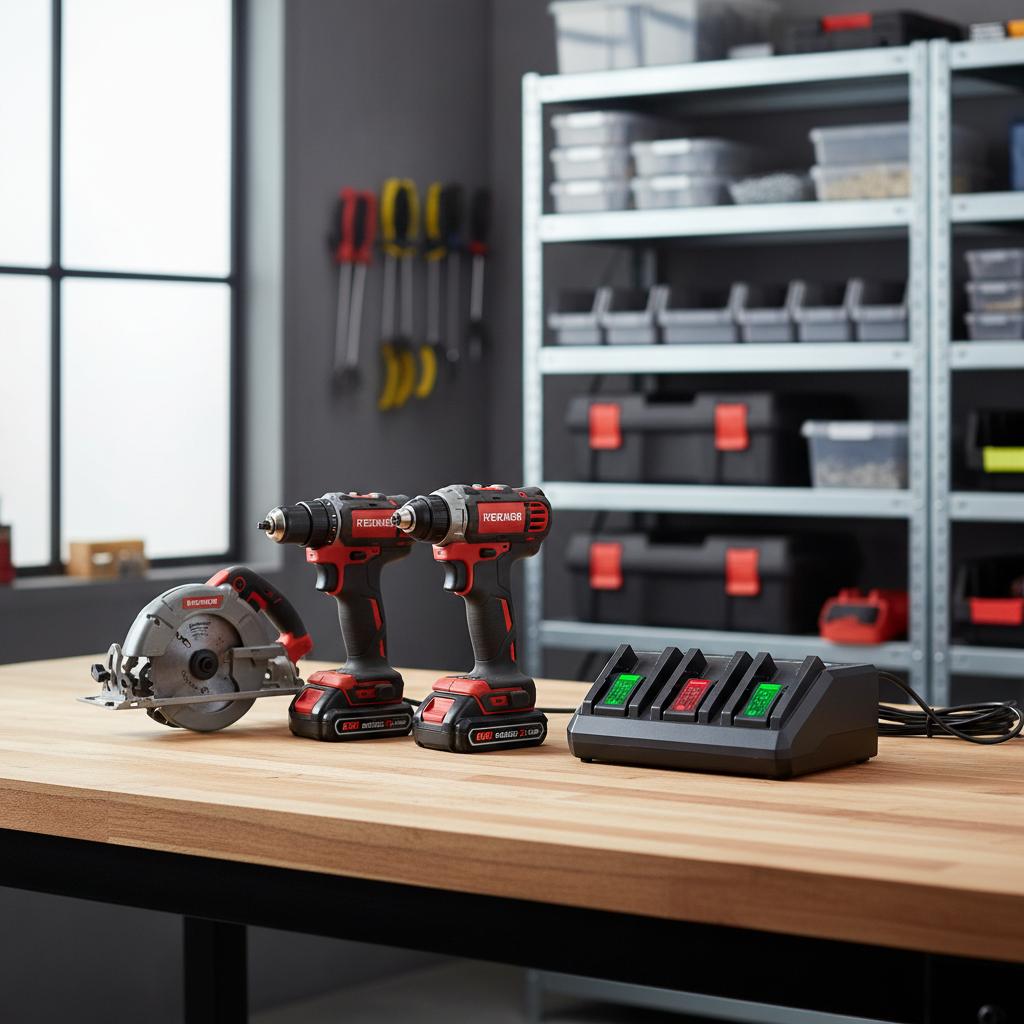
One quick note before we get into recommendations: in most cases, the “best” charger is the one that matches your battery platform and your daily cadence, not the one with the highest amp number on the box.
What “best” really means for a power tool charger in 2026
Chargers look simple, but the differences show up in downtime, pack lifespan, and even jobsite safety. Here’s how I’d define “best” in real use.
- Correct platform match: Voltage and connector style must match the battery ecosystem (18V/20V max, 36V/40V, 60V/80V, etc.).
- Smart charging: Communication between battery and charger to manage current, temperature, and state of charge.
- Right speed for your routine: Fast enough to keep you working, not so aggressive that it becomes your only charging mode.
- Thermal management: Fans, heat sinks, and temperature sensing matter more than people expect.
- Jobsite-friendly build: Stable base, clear indicators, cord durability, and wall-mount options.
According to UL Solutions (UL), chargers and power supplies should be used as evaluated with the equipment they’re intended for, which is a practical way of saying: stick to compatible, listed chargers and avoid sketchy adapters for daily use.
Charger types: standard, fast, sequential, and multi-bay stations
If you’re comparing options, it helps to map each charger type to a work pattern instead of treating “fast” as automatically better.
Standard chargers (safe baseline)
These are often the best default if you charge overnight or between tasks. They’re typically gentler on packs because charge current is lower, and heat stays easier to manage.
Fast chargers (great, but don’t abuse them)
Fast chargers push higher current. They’re useful when you rotate a few batteries through the day, but many people leave every pack on the fast charger all the time, then wonder why capacity feels worse a year later. Battery chemistry and BMS logic vary by brand, so outcomes can differ, but heat is the recurring enemy.
Sequential chargers (one at a time, hands-off)
Some multi-slot setups charge one pack first, then move to the next. That’s often fine for small crews: you get organization without needing a massive power draw.
True multi-bay simultaneous chargers (fleet control)
These shine when you run lots of packs, track readiness visually, and need predictable turnaround. The trade-off is cost, space, and sometimes fan noise.
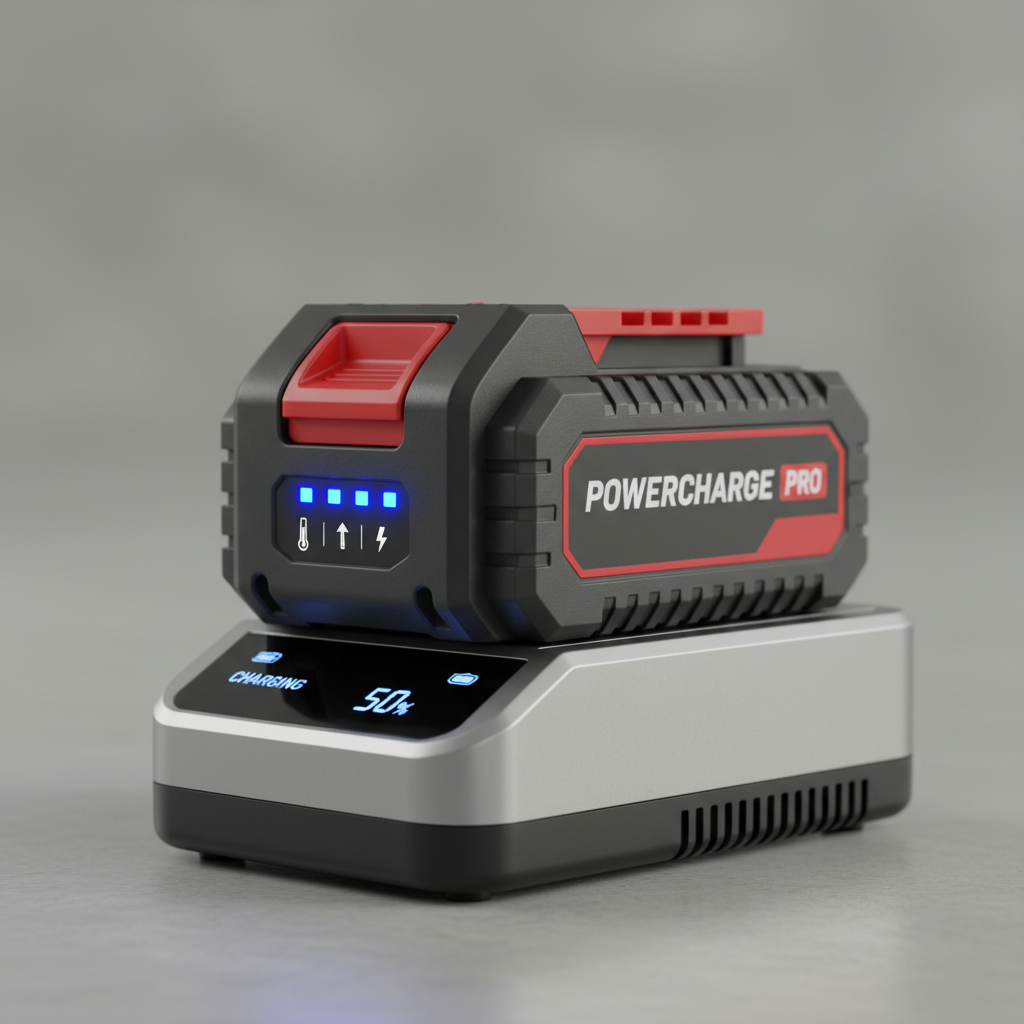
Compatibility: the make-or-break factor (and where people slip)
The fastest path to the best battery charger for power tools is narrowing to chargers designed for your battery platform, then choosing features. Most frustration comes from edge cases.
- Same brand, different generation: Some older NiCd/NiMH chargers won’t support newer lithium packs, even if the battery “fits.”
- 20V MAX vs 18V: Marketing terms vary. If you’re mixing brands, don’t assume equivalence.
- High-output packs: Premium packs (higher Ah, tabless designs, high-drain cells) may benefit from chargers rated to manage heat and higher charge rates.
- Adapters: They can be tempting, but they add failure points and can bypass intended protections. Many pros keep them for emergencies, not daily charging.
According to the U.S. Consumer Product Safety Commission (CPSC), using nonapproved electrical products can increase fire risk; for chargers, that’s a strong argument for staying inside the manufacturer’s ecosystem when possible.
Speed vs battery life: how to choose a charge rate without guessing
“How fast do you need it?” sounds like a simple question, but the real question is: how often do you need fast charging?
- DIY / homeowner: A standard charger is usually enough, and it’s often the calmer choice for battery longevity.
- Weekend projects with bursts: A fast charger can help, but it’s worth keeping a standard charger for overnight charging.
- Daily pro use: Fast charging becomes practical, but a rotation strategy helps: don’t keep topped-off packs baking on a charger all day.
- Crews / fleet: Multi-bay stations plus labeled packs, a simple “in-use / charging / ready” flow, and a dedicated charging area.
If you want a simple rule that works in many situations: use fast charging for turnaround, use standard charging for routine. Not perfect for every platform, but it avoids the common “everything is always on the fastest charger” pattern.
Feature checklist: what’s worth paying for
Here’s the short list that tends to matter after the first month of ownership.
- Temperature monitoring and hot/cold delay, so the charger pauses rather than forcing a charge.
- Active cooling such as a fan, especially for fast chargers and high-capacity packs.
- Clear diagnostics: LEDs that distinguish “charging,” “full,” “pack too hot,” and “pack fault.”
- Wall-mount or stable feet: Small detail, big quality-of-life upgrade in a garage or trailer.
- Multi-voltage support: Useful if you run both compact and higher-voltage platforms within the same brand family.
- Replaceable cord or robust strain relief, because cords fail before electronics in many shops.
What I’d treat as “nice but not essential” for most people: app connectivity, USB ports, and overly complex “modes,” unless you actually use them to manage a fleet.
Quick comparison table: match your situation to a charger style
Use this as a starting point, then filter by your battery platform.
| Use case | Charger type that usually fits | Why it works | Watch-outs |
|---|---|---|---|
| 1–2 batteries, light DIY | Standard single-bay | Lower heat, simple, affordable | Downtime if you only own one pack |
| 3–6 batteries, home projects | Fast single-bay + standard backup | Fast turnaround without always fast-charging | Fast charging every cycle can run hot |
| Daily pro, solo | Fast charger with active cooling | Keeps rotation moving | Needs a clean, ventilated charging spot |
| Crew, lots of packs | Sequential or multi-bay station | Organization and predictable readiness | Higher cost, space, power draw |
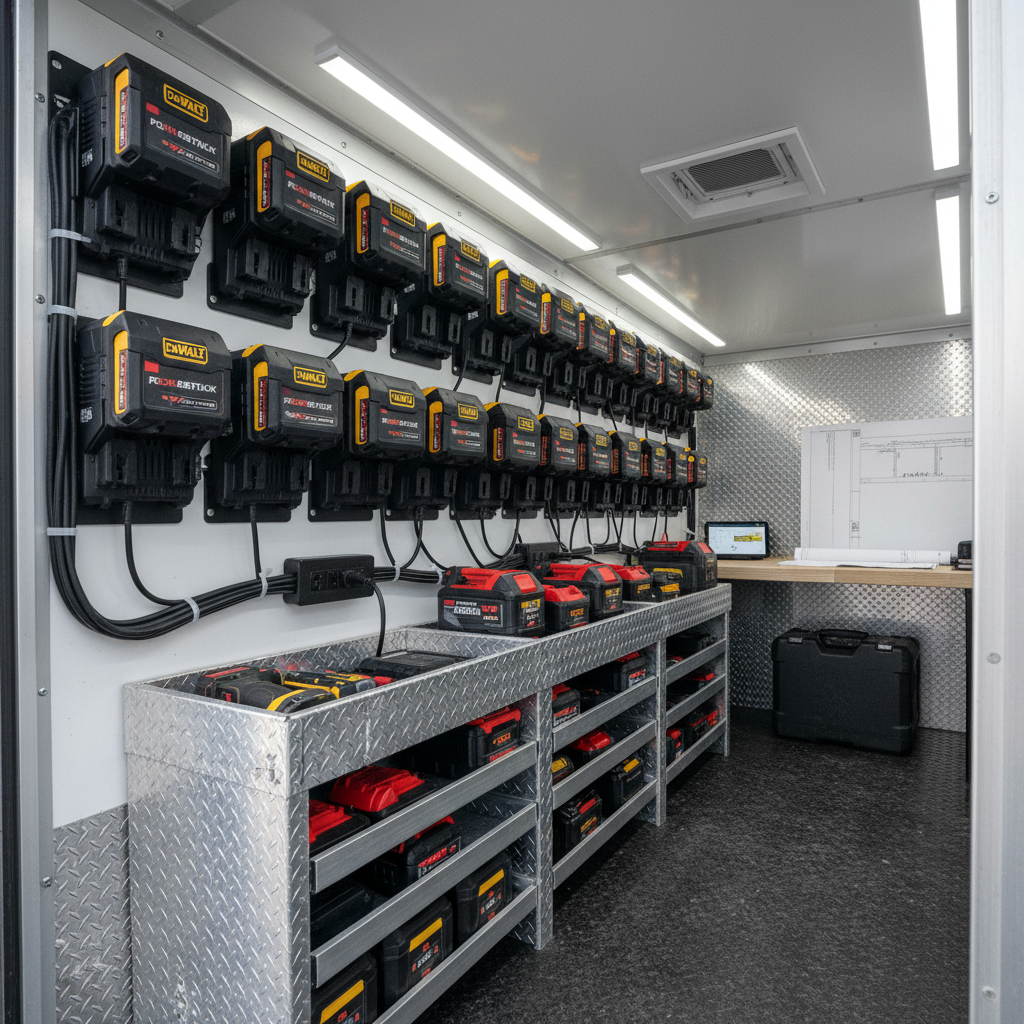
Practical setup: how to get faster charging without buying a new charger
If your current charger is “too slow,” the fix is often your process, airflow, or number of packs, not the model number.
1) Give the charger air (seriously)
Charging on a dusty shelf, in direct sun, or inside a closed toolbox traps heat. Move it to a ventilated surface, keep vents clear, and don’t stack packs on top.
2) Rotate packs instead of topping off
Lithium-ion packs generally prefer moderate temperatures. Many users keep batteries at 100% all week, which can be rough over time depending on the pack design. If you don’t need a pack today, store it off the charger.
3) Buy one more battery before you buy a fancier charger
For a lot of homeowners and solo pros, an extra pack reduces downtime more than a very aggressive charger. It also spreads cycles across packs.
4) Use a dedicated circuit if you run multi-bay charging
If breakers trip or cords get warm, step back. Power delivery on jobsites can be messy, and heavy charging loads may need a cleaner setup. If you’re unsure, it’s reasonable to consult a qualified electrician.
Safety and common mistakes (the stuff people learn the hard way)
- Charging damaged packs: Swollen cases, cracked housings, unusual smell, or leaking means stop and follow the manufacturer’s guidance.
- Covering the charger: Rags, sawdust piles, and closed bins raise temperature and can be risky.
- Using off-brand “replacement” chargers: Some are fine, some are not, and it’s hard to tell from a listing page. Look for appropriate safety certification and exact model compatibility.
- Ignoring fault lights: A blinking code often signals temperature or cell imbalance. Re-seating the pack may help once, but repeated faults deserve attention.
- Leaving charging unattended in high-risk spots: Garages packed with solvents and sawdust are not ideal. If you can, charge in a clear area on a nonflammable surface.
According to the National Fire Protection Association (NFPA), lithium-ion batteries require careful handling and storage practices; in plain terms, reduce heat, reduce damage, and avoid improvising with questionable gear.
Conclusion: picking the best charger without overthinking it
The best battery charger for power tools in 2026 is usually the one that matches your battery platform, charges at a speed your routine truly needs, and manages heat well. If you charge overnight, a solid standard charger can be the smartest buy, if you run tools all day, a cooled fast charger or a well-organized multi-bay station earns its keep.
If you want a clean next step, do this: list your tool platform, count the batteries you actually use in a day, then choose a charger type from the table above. You’ll narrow the field fast and avoid paying for features that never leave the box.